

Mbusa Nyamwisi’s Return to Kinshasa Signals New Political Dynamics in the DRC

Tetha Joselyne MUGABIRWA
5 Min Read

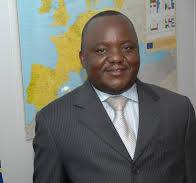
On Tuesday night, Antipas Mbusa Nyamwisi arrived in Kinshasa after a long period away from the country’s political scene. He landed at N’djili International Airport at around 11:00 p.m., aboard South African Airways commercial flight SA058 from Johannesburg, South Africa.

Political sources in Kinshasa indicate that Mbusa Nyamwisi returned to the Democratic Republic of Congo at the invitation of President Félix Antoine Tshisekedi Tshilombo. Another notable development was that he was picked up from the airport by a vehicle from the Office of the President of the Republic, a move that immediately sparked widespread speculation among observers of Congolese politics.

Antipas Mbusa Nyamwisi is one of the most prominent and influential politicians in the Democratic Republic of Congo. He hails from North Kivu Province, specifically the Beni-Lubero region, and rose to prominence during the Congolese wars that took place between 1998 and 2003.
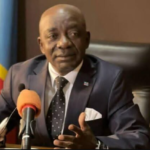
He was one of the leading figures of the RCD-KML (Rassemblement Congolais pour la Démocratie – Kisangani Mouvement de Libération), a political and military movement that played a significant role during the Second Congo War.

Following the peace agreements and the establishment of the transitional government, Mbusa Nyamwisi entered mainstream politics and went on to hold several senior positions in different governments. He served as Minister of Foreign Affairs and was also involved in the country’s security and governance structures at various times.

In the years that followed, he remained an influential political figure, particularly in eastern Congo, where he is regarded as one of the key actors capable of shaping governance and security in the Beni and Lubero areas, as well as other parts of North Kivu Province.

Mbusa Nyamwisi’s return to Kinshasa comes at a time when the country is facing significant political and security challenges. In eastern DRC, fighting continues between the FARDC and various armed groups, including M23, while President Tshisekedi’s administration is seeking ways to further consolidate its authority across the country.

Political observers believe that President Tshisekedi’s invitation to Mbusa Nyamwisi could be part of a broader strategy to bring together influential political figures with strong regional bases in order to build a wider political coalition.

Others also see his return as potentially linked to ongoing discussions among various political and security stakeholders, particularly as the DRC continues to grapple with major challenges in the eastern part of the country.

Share This Article
Leave a comment

Leave a Reply

Your email address will not be published. Required fields are marked *