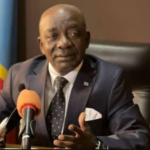



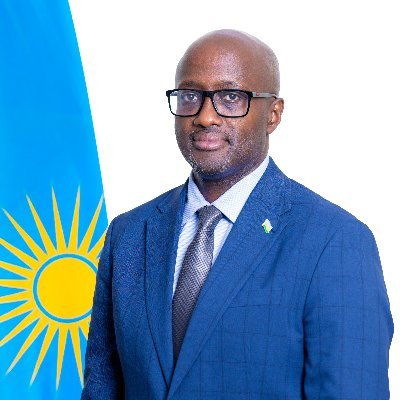
Olivier Nduhungirehe, Rwanda’s Minister of Foreign Affairs and International Cooperation, has condemned the case filed by the Democratic Republic of the Congo before the International Court of Justice (ICJ), which accuses Rwanda of committing crimes against Congolese civilians, including killings, and of looting the country’s natural resources.
The case, filed on June 26, 2026, alleges that Rwanda has deployed troops on the territory of the Democratic Republic of the Congo over the past 30 years, in violation of several international treaties, including the Convention on the Prevention and Punishment of the Crime of Genocide, the Convention against Torture, the Convention on the Elimination of Racial Discrimination, and the Convention on the Elimination of All Forms of Discrimination against Women.
Through its Minister of Justice and Attorney General, Guillaume Ngefa, the Congolese government asked the International Court of Justice (ICJ) to formally declare that Rwanda bears responsibility for these alleged violations.
On June 29, 2026, Olivier Nduhungirehe told journalist Marc Perelman of France 24 that the case is a political maneuver by the government of the Democratic Republic of the Congo aimed at diverting attention from its alleged collaboration with the Democratic Forces for the Liberation of Rwanda, an armed group that Rwanda describes as genocidal.
Nduhungirehe said: “It is a political tactic by the DRC, which is working with the genocidal group known as the FDLR. It is President Félix Tshisekedi and his government… The first question is: who is collaborating with a genocidal group? Clearly, it is the government of the DRC.”
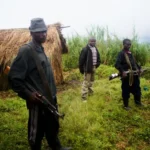
He further alleged that the Congolese armed forces are continuing attacks against Congolese members of the Banyamulenge community in the Minembwe commune, which spans the territories of Fizi, Uvira, and Mwenga in South Kivu, as well as against other Congolese Tutsi communities, with the intention of exterminating them.
He added: “These are people who are close to President Félix Tshisekedi, including the former army spokesperson, Sylvain Ekenge. So who is collaborating with criminal groups such as Wazalendo, and who is bringing in mercenaries?”
Late last year, Maj. Gen. Ekenge, then spokesperson for the Armed Forces of the Democratic Republic of the Congo, said on the state broadcaster RTNC that Congolese citizens should be cautious about marrying Tutsi women, claiming that they do not have children with people from other ethnic groups.
His remarks sparked widespread controversy, prompting several of the DRC’s partner countries, including Belgium, to call on the Congolese authorities to take disciplinary action against the officer. Under mounting pressure, the government suspended him indefinitely.
Minister Olivier Nduhungirehe argued that a country which violates fundamental human rights and targets its own citizens because of their ethnicity should not accuse Rwanda of genocide-related crimes.
He added that competent judicial bodies have the authority to examine the case in depth and will ultimately determine its merits and issue a ruling.