


As the Democratic Republic of the Congo (DRC) continues to face serious security challenges, particularly in the country’s eastern region, the ruling UDPS party is continuing to promote constitutional reform. Some of its leaders argue that the President’s powers should be expanded to enable quicker decision-making during major national crises.
This was highlighted by Christian Lumu, Vice President of the UDPS Youth League and a member of the party’s Congress preparation committee, during a discussion on X Space, where he explained why his party believes changes are needed in the functioning of state institutions.
Christian Lumu said that UDPS has never fully accepted the 2006 Constitution, arguing that, according to his party, it emerged from a process that lacked full legitimacy. He added that after nearly twenty years, the Constitution no longer addresses the challenges the country is facing today.
He pointed out that these challenges include insecurity, the functioning of the justice system, the fight against corruption, and improving governance so that state institutions can operate more effectively.
In remarks that have sparked political debate, Lumu said there are constitutional provisions that need to be reviewed, particularly regarding how the state makes decisions during security crises.
He gave the example of a provision requiring Parliament to first convene before certain decisions related to war can be made, arguing that such a process could delay urgent responses when the country is facing danger.
He said there is a need to examine ways of enabling the country’s leadership to make quick decisions during exceptional situations, with the aim of protecting national sovereignty and the security of citizens.
Lumu also revealed that one of the issues being considered in the constitutional reform process is a review of the structure of government, with the possibility of granting the President of the Republic greater powers in certain areas of governance.
He said the country is facing exceptional circumstances that require institutions capable of making swift decisions, especially when dealing with security challenges.
Opposition criticizes the idea of expanding presidential powers.
On the other hand, opposition groups argue that the main problem in the Democratic Republic of Congo does not come from the Constitution itself, but rather from how it is being implemented.
One of the opposition politicians, Prince Epenge, said that the problem is not with the text of the Constitution, but with the leaders responsible for implementing it.
He said: “The Constitution works well; the problem lies with the people who implement it.”
Prince Epenge criticized the plan to increase the powers of the President of the Republic, saying it could weaken the authority of other institutions that are meant to provide checks and balances on government power.
Debate over constitutional reform continues to grow in the DRC
The debate over constitutional reform continues to intensify in the Democratic Republic of Congo, as the country faces ongoing insecurity in the east and political disagreements over the best ways to address these challenges.
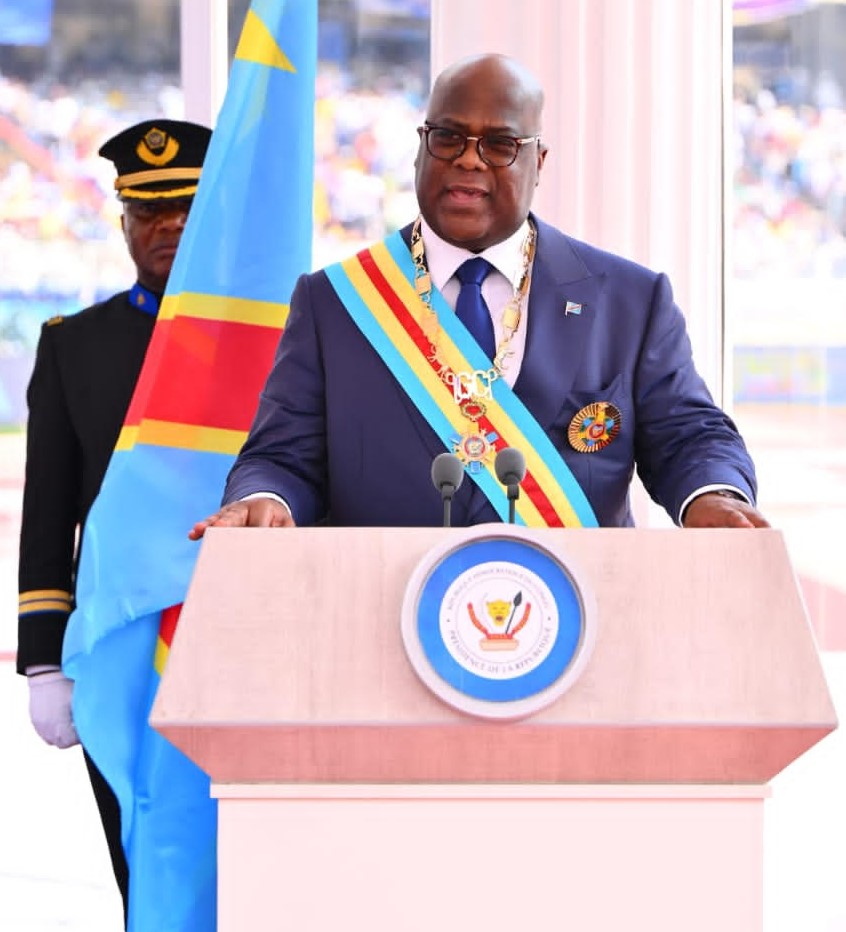
On the side of President Félix Tshisekedi’s government, supporters of the reform argue that updating state institutions is necessary to make them more effective and better equipped to deal with the country’s challenges.
However, opposition groups have expressed concerns that such changes could alter the system of checks and balances among state institutions and potentially affect the functioning of democracy in the DRC.