


For many years, the presence of the FDLR, an armed group designated as a terrorist organization, has been a major source of tensions between the Democratic Republic of Congo and Rwanda, with the two countries disagreeing over the group’s strength and those supporting it.
Kinshasa’s statements regarding the group have changed repeatedly. At times, the government denied that the FDLR existed or downplayed its capabilities, describing its members as elderly men who were no longer capable of fighting. It later acknowledged the group’s existence and said it should be dismantled, with its fighters reintegrated into civilian life.
The FDLR was established by individuals who participated in the planning and implementation of the 1994 Genocide against the Tutsi, including politicians and former members of the defeated Rwandan Armed Forces (Ex-FAR), as well as members of the Interahamwe. The group continues to rebuild its ranks and recruit new, mainly young, fighters.
The group operates in eastern DRC. The Rwandan government accuses it of posing a security threat, particularly because of its proximity to Rwanda’s border. The DRC government, however, has at times sought to downplay the FDLR issue, arguing that the immediate priority should be dismantling AFC/M23.
The FDLR issue has featured prominently in mediation efforts, including the peace talks held in Pretoria, South Africa, more than 20 years ago, the Luanda process in Angola in 2022, and talks held in Washington, D.C., in the United States since early 2025.
In Washington, a peace agreement was signed that included provisions for dismantling the group based on measures outlined in the CONOPS framework. However, even after signing the agreement, the DRC government continued to send mixed signals about its position on the issue.
The DRC Government Began Portraying the FDLR as a Non-Existent Threat
At one point, officials in Kinshasa argued that the FDLR did not have sufficient strength to threaten Rwanda’s security, seeking to suggest that the Rwandan government should stop presenting the group as a threat to its national security.
They used this position to accuse Rwanda of exploiting the FDLR issue as a pretext to interfere in DRC affairs and seek to “plunder” natural resources in the eastern part of the country.
In March 2025, Dr. Christophe Lutundula, who previously served as DRC Foreign Minister, said: “The time had come for us to begin operations to eradicate those remaining FDLR elements that Rwanda talks about, but which I do not acknowledge and do not know who they are.”
Dr. Lutundula, who strongly argued during his time as minister that the FDLR no longer existed, continued: “Is Rwanda still talking about the FDLR as it did before? No, because the main issue is about the economy.”
After the Washington peace agreement was signed in June 2025, DRC Minister of Foreign Trade Julien Paluku said that the FDLR did not exist and was instead a fabrication created by Rwanda.
Minister Paluku said that the FDLR narrative had blinded the world for 30 years, and claimed that Rwanda repeatedly revived the issue of the group as a pretext to invade the DRC and steal its mineral resources.
He said: “The real FDLR that Rwanda is looking for in the DRC is Congo’s mineral wealth.”
Rwanda’s Ambassador to Algeria, Vincent Karega, said it was not surprising that Paluku made such remarks, given that he had served for many years as Governor of North Kivu Province, where the FDLR operates, and allegedly provided it with shelter in Virunga National Park.
The DRC Government Contradicts Itself
Before signing an agreement that made the dismantling of the FDLR one of its key provisions, the DRC government had openly acknowledged that the armed group existed and posed a security threat to Rwanda and the wider region.
On April 15, 2024, Major General Sylvain Ekenge, then spokesperson for the DRC armed forces, said on national television that the FDLR was present in the country and had played a significant role in the deaths of many Congolese.
At the time, Major General Ekenge said:
“The FDLR attacks Congolese people and kills Congolese people. Of the more than 10 million people killed over the past 10 years, the FDLR accounts for a significant share of the deaths.”
Ekenge’s remarks were not merely statements, as he had spent considerable time serving in North Kivu Province, where he served as spokesperson for military operations in the province and as the military adviser to the provincial governor.
His comments were seen as a significant shift in position, given that the DRC government had for a long time sent mixed messages regarding the FDLR issue.
In October 2025, the DRC military issued a statement calling on its soldiers to end cooperation with the FDLR and ordering the group’s fighters to lay down their weapons, warning that those who failed to comply would face military action.
Despite the statement, the DRC military allegedly continued cooperating with the FDLR and supplying it with weapons and ammunition, while the group did not lay down its arms. The 90-day deadline set for dismantling the group passed without any significant change.
The Excuse Returns
As the DRC government faced renewed pressure over its failure to fulfill its obligation to dismantle the FDLR, it began claiming that fighters from the group were located in areas controlled by AFC/M23, suggesting that this was preventing it from implementing the peace agreement.
In late March 2026, the DRC military announced in Kisangani that it had launched operations to dismantle the FDLR. However, two days later, it reportedly sent weapons to the town of Pinga in Walikale Territory for use in fighting against AFC/M23.
A UN experts’ report released in late June 2026 stated that the DRC military had assured the FDLR that it would not dismantle the group and that the two sides would continue working together as key partners.
Reports from eastern DRC indicate that FDLR fighters in areas controlled by the government were allegedly advised to move into areas controlled by AFC/M23 so that their presence could be used as a justification for not attacking them.
On July 30, 2026, Cure Ngoma, the FDLR’s political spokesperson, stated that the group’s fighters were located exclusively in areas controlled by AFC/M23.
Cure Ngoma said:
“I can tell you that we are located in eastern Congo, particularly in the areas occupied by M23 and Rwanda. In other words, generally speaking, that is where our forces are present.”
During security talks involving representatives from Rwanda, the DRC, and the United States through a joint mechanism known as the JSCM, it was revealed that some FDLR fighters were present in areas controlled by AFC/M23, while others were in areas controlled by the DRC government.
In June 2026, Massad Boulos, the U.S. President’s Senior Adviser for Africa, told the United Nations Security Council that the DRC government had failed to dismantle the FDLR, at least in the areas under its control.
Boulos said:
“Despite the progress that has been made, the parties to the agreement continue to fall short of their commitments. The DRC has failed to fulfill its obligation to dismantle the FDLR, at least in the areas under its control.”
Openly Admitting It Will Not Dismantle the FDLR
A document that has been circulating in international media in recent days appears to have been signed by FDLR President Lt. Gen. Victor Byiringiro on May 30, 2026, and sent to President Félix Tshisekedi.
The document appears to outline a plan for FDLR fighters to lay down their weapons, undergo reintegration into civilian life, and be placed in designated, secured facilities. It is presented as a plan for the dismantling of the armed group.
Since July 13, Minister in charge of Regional Integration Floribert Anzuluni has circulated the document to various African and European countries, claiming that the DRC government reached an agreement with the FDLR for the group to lay down its weapons.
As Anzuluni circulated the document, Rwanda’s Minister of Foreign Affairs and International Cooperation, Ambassador Olivier Nduhungirehe, said that the FDLR document was not provided for under the Washington peace agreement.
On July 29, Minister Nduhungirehe reminded the DRC government that the FDLR was not a signatory to the Washington agreement. Instead, he said, it is an issue that must be addressed and the group completely dismantled under the agreement in order to achieve lasting peace in the region.
He said:
“The signing of this sham agreement between the husband (the DRC government), his son (the FDLR), and the evil spirit (the ideology of genocide) has nothing to do with the Washington peace agreement because it is not provided for anywhere in that agreement.”
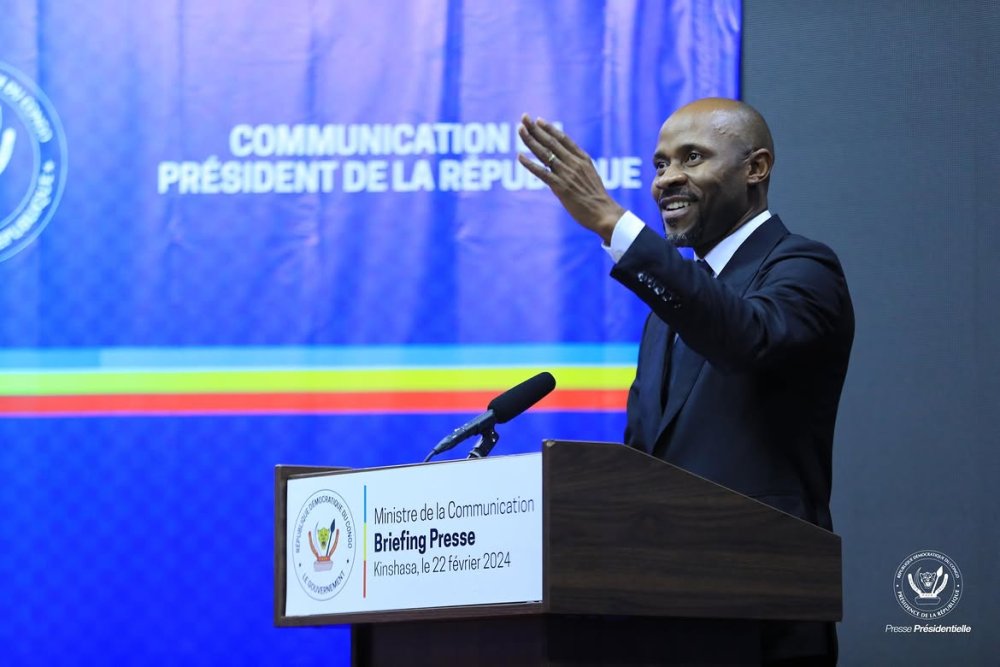
On July 30, DRC Government Spokesperson Patrick Muyaya said that if the FDLR had agreed to lay down its weapons and return to civilian life, there would be no reason for the national army to attack it.
Muyaya said:
“You cannot use force against those who have voluntarily chosen the path of peace, in the presence of witnesses.”
Prof. Bob Kabamba, a lecturer at the University of Liège in Belgium, said the FDLR could technically be declared dismantled but later re-emerge under a different name. He noted that before it became known as the FDLR, the group had operated under the names RDR and ALiR, while its military and political structure remained largely unchanged.