


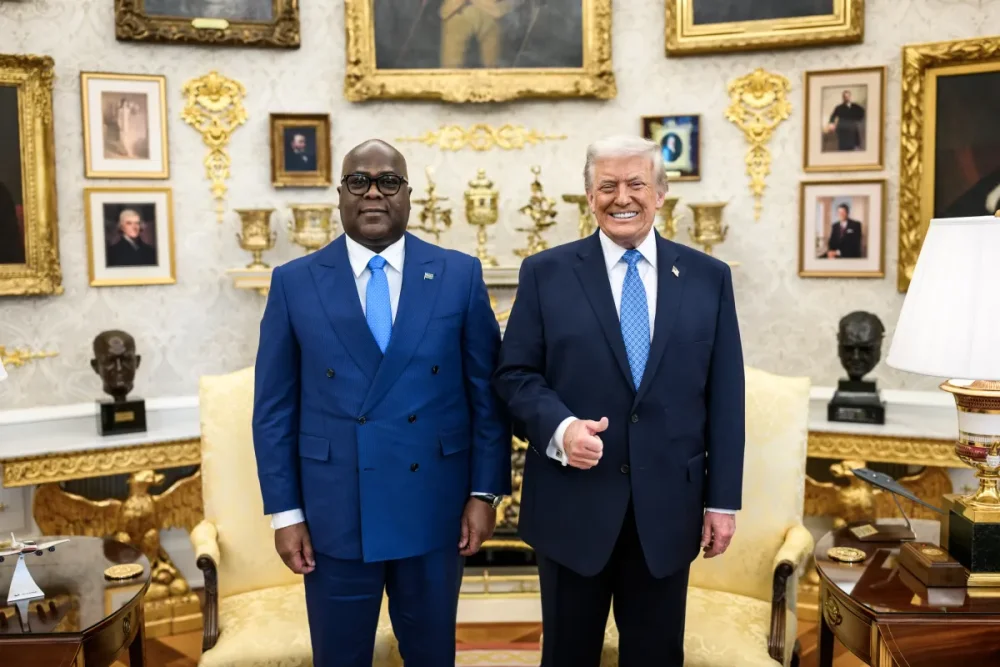
The government of the Democratic Republic of Congo (DRC) continues to spend money on American firms to lobby U.S. President Donald Trump on its behalf.
At the beginning of 2025, the government of the Democratic Republic of Congo (DRC) had contracts with U.S.-based firms worth a combined total of nearly $8 million.
The objective was to find ways for officials in Kinshasa to get their message to the office of the U.S. President, particularly regarding the conflict in eastern DRC and the proposed agreement on cooperation in the mining sector.
In January 2025, the DRC government renewed its contract with Ballard Partners, a firm with strong ties to members of the Republican Party. The agreement stipulated that the country would pay the firm $100,000 per month.
Ballard Partners was tasked with helping the DRC government strengthen its relationship with the United States and engage with U.S. officials, private-sector representatives, and non-governmental organizations. Among the issues it was expected to advocate for on behalf of Kinshasa were economic cooperation and human rights concerns in eastern DRC.
Another major contract was signed on March 4, 2025, between the DRC and Earhart Turner LLC. The agreement was worth $5 million over a six-month period, with the payment due immediately after the contract was signed.
Earhart was tasked with advancing the interests of the DRC government before the U.S. Congress and other key institutions in Washington, D.C.
Reports showed that by April 2025, Kinshasa had signed contracts with three firms, including Von Batten-Montague-York. Together, the contracts were worth nearly $8 million.
Seeking people with close ties to Trump and his family was seen as a faster way to engage with the United States than through traditional diplomacy. The DRC sought to use its natural resources as leverage in negotiations with Washington and to secure support on security issues.
However, President Félix Tshisekedi later suspended some of these contracts after meeting with Massad Boulos, Trump’s adviser on African affairs, on April 3, 2025. Boulos called for talks between Kinshasa and Washington to be conducted through official channels rather than private lobbying firms.
The DRC government was dissatisfied with the results it was getting through traditional diplomacy because, starting in June 2025, it came under increasing pressure to comply with the peace agreements it had signed with Rwanda.
Under these agreements, the DRC government is required to dismantle the FDLR, which has been designated as a terrorist group. Instead of complying, however, Kinshasa continued to support the group and strengthened its cooperation with it in the fight against the AFC/M23 coalition.
On August 5, 2026, The Financial Times reported that the DRC government was still working with lobbying firms connected to Republicans and others with close ties to President Trump.
The publication reports that the DRC government pays American firms $100,000 every month to lobby U.S. President Donald Trump on its behalf.
The DRC government has also stepped up its use of the media to help spread its narrative and communicate its demands to the office of the U.S. President.
As part of this strategy, it sought to build ties with Angolan journalist Hariana Verás Victória. She works at the White House and in other key U.S. institutions, where she covers African affairs.
Hariana began advocating for the DRC government in early 2025 and intensified her efforts following the signing of the Washington agreements. Whenever she met Trump or members of Congress, she would raise issues that served Kinshasa’s interests. At times, she even carried a microphone bearing the logo of the DRC’s state broadcaster, RTNC.
Analysts say Kinshasa is seeking quick results that serve its interests from its discussions with the United States, amid concerns that the midterm elections could reverse some of the progress already made.
The elections, scheduled for November 2026, could help the Democratic Party gain additional seats in Congress, potentially enabling it to block or challenge some of Trump’s decisions. This would be different from the current situation, in which Republicans hold greater influence.
Throughout U.S. history, midterm elections have often posed a challenge for the party in power. When voters are dissatisfied with the President’s performance, the state of the economy, or government policies, they use the elections as an opportunity to express their discontent with the administration.