


Congolese refugees living in Rwanda have alleged that among President of the Democratic Republic of Congo (DRC) Félix Antoine Tshisekedi’s objectives in amending the country’s Constitution is to strip Congolese Tutsi of their citizenship.
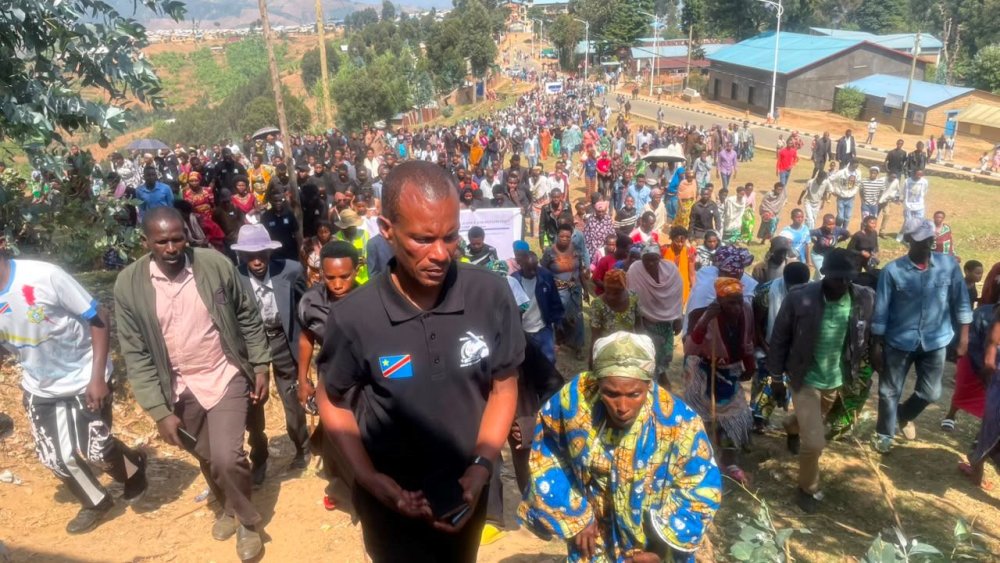
They made the remarks on August 10, 2026, during an event commemorating the 22nd anniversary of the Congolese Tutsi who were killed at 14 different locations, including the Gatumba refugee camp in Burundi.
The event was preceded by a commemorative walk and the lighting of a candle of hope. The refugees, who have lived in Rwanda for more than 30 years, said that despite the long wait, they remain hopeful that they will eventually return home and obtain justice.
The commemoration comes at a time when efforts to amend the Constitution are intensifying in the DRC, paving the way for President Félix Antoine Tshisekedi to seek a third term.
Mpumuro Joseph, the coordinator of Congolese refugee camps in Rwanda, said that among President Tshisekedi’s objectives in amending the Constitution is an attempt to strip Congolese Tutsi of their citizenship.
“In amending the Constitution, Tshisekedi is not only seeking to run for a third term; he also wants to strip us of our citizenship so that he can eliminate us.”
Mpumuro said the discrimination against Congolese Tutsi is deeply rooted in history, dating back 141 years to the 1885 Berlin Conference, which established the borders of African countries and resulted in territory that had been part of Rwanda being incorporated into the DRC.
“As Congolese refugees, we want justice and we want to return home to Congo. To the young Congolese refugees, you should strive to return home rather than focusing on going abroad, because you cannot go into exile if you have no homeland to return to.”
Ndarishize Benjamin, one of the survivors of the Gatumba refugee camp massacre, said they had fled Uvira for Burundi, where they were provided with a refugee camp near the border. In 2004, attackers reached the camp, set the refugees on fire, hacked those who survived the flames to death, and shot others.
He said, “The Burundian soldiers were nearby, but they never came to our rescue. It was a conspiracy against us. We are seeking justice because, to this day, those who killed us have never been punished. Agathon Rwasa went to the media and openly claimed responsibility for it.”
Albert Bisore Ngemanyi, the representative of the Congolese Tutsi Survivors Voice organization, which organizes commemorative activities for Congolese Tutsi, told IGIHE that they have so far documented more than 15,000 people who have been killed in these atrocities since 1992.
He said, “We are calling for justice from the governments of Burundi and the DRC. They should investigate General Ekenge and Bitakwira for using hate speech. The killings of Congolese Tutsi are still continuing today because we hear that aircraft have been sent from Kinshasa to kill Tutsi in Minembwe.”
Karongi District Mayor Muzungu Gerald thanked the refugees, saying that despite the injustices they have suffered, they have not developed a desire to harm others.
He said, “Nothing lasts forever. That is how this world is; a person must find their own solution. We urge you to continue building unity, cooperation and mutual respect, and to send your children to school so that they can have a better future.”
As of March 2026, Rwanda was hosting more than 79,000 Congolese refugees. In addition to Kiziba Refugee Camp, the 22nd commemoration of Congolese Tutsi who were killed because of their identity was also held in other camps hosting Congolese refugees, namely Mahama, Nyabiheke, Kigeme and Mugombwa.