



The government of the Democratic Republic of Congo (DRC) has announced that an African country has agreed to host some members of the FDLR, a group supported by Kinshasa that includes individuals who took part in the 1994 Genocide against the Tutsi and continues to spread genocide ideology in the region.
The DRC has in recent days said it held talks with the FDLR, a terrorist group, to persuade it to lay down its weapons, but the group refused to be repatriated to Rwanda. So far, Kinshasa has not revealed the name of the country that has agreed to receive some of its members.
The secrecy surrounding the country has raised questions about which nation is prepared to host people accused of contributing to a security crisis that has persisted in the Great Lakes region for more than 30 years.
The FDLR, a terrorist group deeply rooted in eastern DRC, poses a serious security threat to the Great Lakes region, where Rwanda is located. For years, the international community has been accused of underestimating the seriousness of the threat posed by the FDLR to Rwanda, Congolese civilians and regional security.
The group was founded by some former members of the Ex-FAR and Interahamwe, groups that participated in the 1994 Genocide against the Tutsi, in which more than one million people were killed over a period of 100 days.
In eastern DRC, the group has promoted hatred and violence, contributing to continued insecurity and violence in the region.
The Washington Agreement, signed in December 2025, calls for the accelerated dismantling of the FDLR. However, the DRC later announced and presented to several countries a proposal for the FDLR to voluntarily disarm. Rwanda strongly rejected the proposal, arguing that it contradicts the agreement signed by the two countries in Washington.
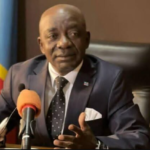
Congolese Minister of Regional Cooperation, Floribert Anzuluni, said talks with a country that could host FDLR members after they are disarmed are at an advanced stage.
Anzuluni told RFI: “One country has already given its approval.” He added that Kinshasa would publicly reveal the country’s name soon.
The DRC appears to be proposing that FDLR members first lay down their weapons. Those who agree to return to Rwanda would be repatriated, while those unwilling or unable to return would be given the opportunity to relocate to one or more countries.
However, any country that agrees to host FDLR members would need to carefully examine the backgrounds and histories of the people it intends to receive.
The FDLR is not an ordinary group of refugees looking for a place to settle. Nor are they simply elderly foreign fighters living in the Congolese forests. The group’s history cannot be separated from the role some of its members played in the 1994 Genocide against the Tutsi in Rwanda.
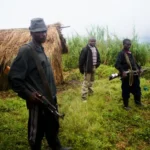
FDLR terrorist activities over the years have affected parts of western and northern Rwanda. Eastern DRC has become a stronghold for the FDLR, where it recruits new fighters who are used in the conflict involving the FARDC and AFC/M23, as well as in attacks targeting civilians.
The United Nations Security Council has reported that the FDLR has committed serious violations of international law, including more than 600 killings, injuries, sexual violence and the forced displacement of civilians, with women and children among the victims.
Rwanda has for years maintained that a terrorist group driven by genocide ideology should not be given a platform for negotiations.
The country that agrees to host members of the group should ask whether it will contribute to dismantling the FDLR as an armed group driven by genocide ideology, or whether it will provide the group with another platform from which to continue spreading its ideology, violence and hatred, as has happened in eastern Rwanda and the DRC.
Analysts say that if the host country is genuinely committed to promoting peace, accepting FDLR members should not replace efforts to dismantle the group. Instead, it should also address and dismantle the structures that have allowed its ideology to survive.
The country that agrees to host FDLR members will ultimately determine whether the move helps bring an end to a security crisis that has lasted for more than 30 years, or whether the crisis simply takes a different form—raising the question of whether it is prepared to carry this burden.
A July 2026 report by UN experts on the FDLR’s strength states that the group claims to have more than 10,000 fighters, with nearly half of them said to be actively engaged in regular military operations. The FDLR-CRAP faction, meanwhile, has claimed to have more than 20,000 fighters.
However, the report indicates that these figures are not considered reliable. The UN and intelligence agencies estimate that the FDLR as a whole has between 3,500 and 4,500 fighters. The Washington Agreement, meanwhile, estimated the FDLR’s strength at between 3,000 and 3,500 fighters.