


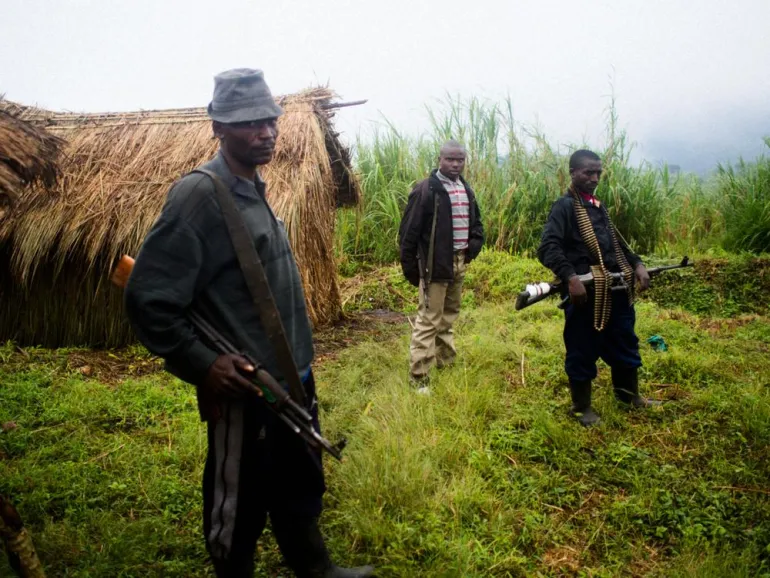
Since late July 2026, the Democratic Republic of Congo (DRC) government has announced that FDLR fighters will be disarmed, and those who refuse to return to Rwanda will be relocated to one or more African countries, whose identities have not yet been disclosed.
Although dismantling the FDLR still appears to be a long way off, disarming the group is part of an agreement between the DRC government and the FDLR. The agreement reportedly aims to encourage fighters to voluntarily lay down their arms, place them in designated centers, and help reintegrate them into civilian life. Rwanda, however, has strongly rejected the deal, saying it is not provided for in the Washington Peace Agreement.
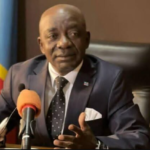
In July 2025, DRC Minister for Regional Cooperation Floribert Anzuluni confirmed the existence of the agreement. He later said that one African country had agreed to receive FDLR fighters who refuse to return to Rwanda, while talks were ongoing with other countries.
The group’s history suggests that the problem may not end simply with disarmament. Its networks, political agenda, and ideology could remain, given that previous efforts to dismantle the FDLR have failed to eliminate it completely.
This has prompted the European Union, the United States, France, and other partner countries monitoring developments in the region, as well as the International Crisis Group (ICG), to remind the DRC that it must dismantle the FDLR as required by the Washington Peace Agreement.
ICG also called on the DRC to establish a clear plan and timeline for dismantling the FDLR, and to clarify how its leaders and fighters suspected of serious crimes will be brought to justice.
The FDLR Problem Is Not Just About Weapons
Following the 1994 Genocide against the Tutsi, some members of the defeated Rwandan army, Ex-FAR, Interahamwe, and individuals who helped plan the genocide fled to Zaire, which later became the Democratic Republic of Congo (DRC). The FDLR itself was established in 2000 by former members of these groups.
The U.S. Department of the Treasury says the FDLR has committed ethnically motivated violence, killed civilians, carried out abductions, and recruited children into its ranks—reasons why its leaders have been sanctioned.
Regional political analysts say this should be a serious lesson for any country considering hosting the group’s fighters. Disarming them does not necessarily eliminate the ideology they have followed for years or the support networks they have built.
United Nations expert reports indicate that although the FDLR has continued to be led by Rwandans, it has increasingly recruited Congolese fighters over the years.
The FDLR has also maintained longstanding links with the DRC government. Within the Congolese army, there have reportedly been officials specifically tasked with coordinating with the FDLR, while during periods of conflict, some of its fighters have been integrated into the national army.
This demonstrates the considerable capacity the group has developed during its many years in the DRC and how deeply it has become embedded in Congolese society, to the point where some people regard it as part of their own military force.
The biggest danger for any country that accepts FDLR fighters who refuse to return to Rwanda would be allowing the former leadership structures of the group to retain their organization and influence.
As the leaders and fighters continue operating under what they describe as political motives, they could maintain activities aimed at destabilizing Rwanda or promoting division.
They could do this through long-standing support networks or social media, gradually spreading their ideology to people in the host country and even into government institutions, as has happened in the DRC.
At that point, the issue would no longer simply be about “former Rwandan fighters”; it could become a problem for the host country itself, as the divisive ideology could eventually spread within its society.
Testimonies from former FDLR members have frequently mentioned travelling to Burundi for military training. In recent times, some Burundian officials have also been heard defending the group and portraying it as posing no threat.
Accepting the FDLR in another country could therefore risk openly fueling genocidal ideology across Africa.