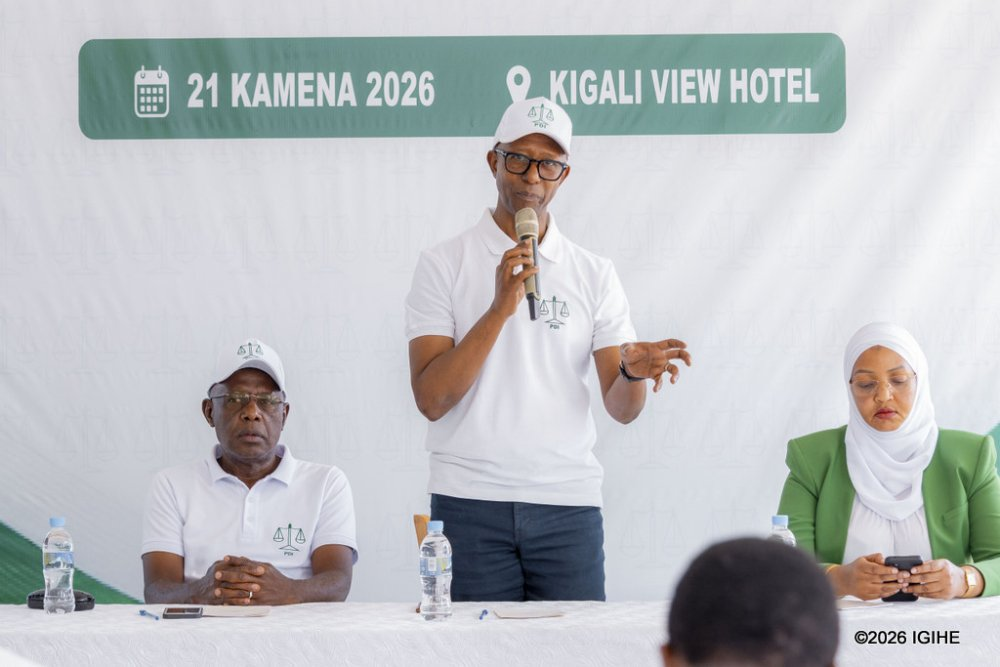



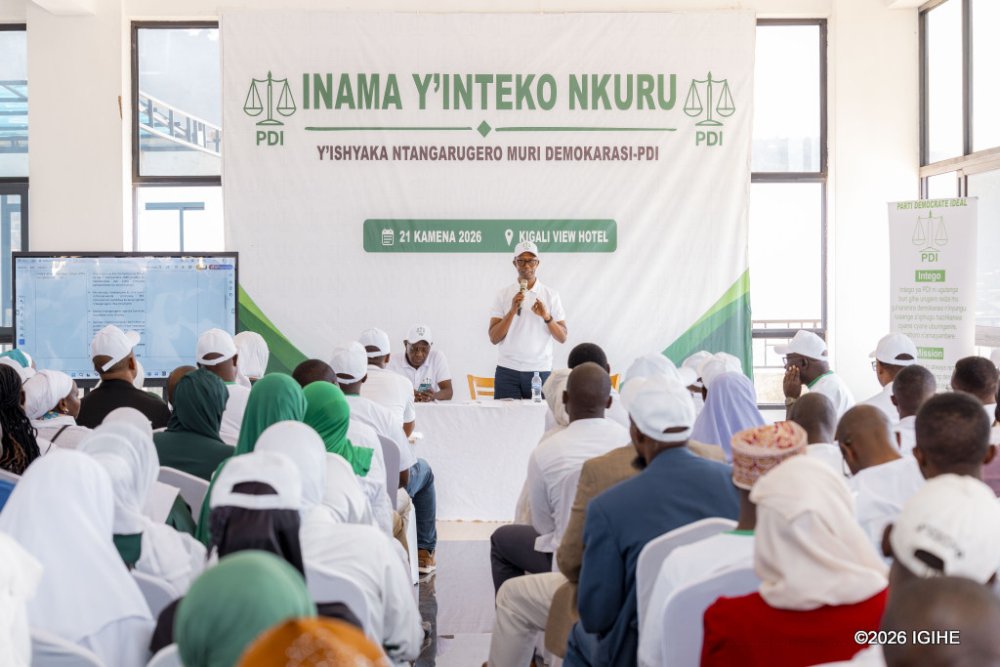
Sheikh Musa Fazil Harerimana, President of the Ideal Democratic Party (PDI), firmly rejected remarks attributed to President Félix Tshisekedi suggesting that closer cooperation with Rwanda would only be possible if the country were governed by the Interahamwe who took part in the 1994 Genocide against the Tutsi, stating that such a scenario is unrealistic and will never happen.
He made these remarks on June 21, 2026, while addressing PDI members during the party’s National Congress, an annual meeting held once a year.
In his remarks to the press, Harerimana stated that politics in the Great Lakes region remains unstable due to the continued presence and support of the terrorist group FDLR by some countries.
The FDLR terrorist group was formed by individuals who participated in the 1994 Genocide against the Tutsi and who continue to harbor plans of returning to Rwanda, overthrowing the government, and pursuing their agenda of exterminating Tutsi populations.
It is a group based in eastern Democratic Republic of Congo, where it has operated while cooperating with various leaders of that country, including current President Félix Tshisekedi, who has reportedly promised to support it in efforts to overthrow the government in Rwanda.
Although Rwanda and the Democratic Republic of Congo signed an agreement in the United States on December 4, 2025, it appears that the Congolese side is reluctant to comply with its provisions.
Sheikh Musa Fazil Harerimana explained that the reason President Félix Tshisekedi and his allies are unwilling to implement the agreements they signed is because they are not satisfied with what the agreements contain.
He said, “If the DRC believes that it can only live in good relations with Rwanda if Rwanda is governed by the Interahamwe, then you understand that implementing these agreements will be difficult, and that their dreams are impossible.”
He continued, “They sign agreements because of the pressure they are under, but they do not truly want them. Even tomorrow you may hear him say things that are not true—like when a team plays good football and Africans are happy, he twists it into something else, because in his heart he is not pleased.”
The agreements signed by both countries include provisions to dismantle the FDLR armed group, while Rwanda is also expected to lift its defensive measures.
Harerimana stated that President Tshisekedi would only be satisfied if he saw a genocidaire or an Interahamwe leading Rwanda, as he allegedly desires.
He said, “His happiness would be to see a genocidaire, or Interahamwe, or another person who was not even born at the time but who has been influenced by an ideology of hatred, discrimination, and division, leading Rwanda.”
He added, “If he does not see such a person leading Rwanda, then all agreements and negotiations he enters into are done reluctantly. However, that will not prevent Rwanda’s development.”
He explained that after the 1994 Genocide against the Tutsi, those who participated in it fled to the Democratic Republic of Congo, where they went on to form the FDLR. He added that countries such as the DRC and Burundi have at times been accused of working with the group.
He said, “The Interahamwe, the genocidaires who committed the genocide, fled into the region, and there are countries that received them along with their ideology. If you look at Burundi and Congo, they welcomed them together with their ideology, and they continue to water it so that it keeps causing us problems, and they have even tried to act on it.”
He further explained that PDI members should be given the true history and a clear understanding of the situation so they can better fight against those spreading falsehoods.
He also noted that sometimes foreigners may be misled, blinded by self-interest, and end up making inaccurate statements about the situation.
He said, “There are times when the international community fails to understand due to the self-interest of some leaders. Even though they are far away, they extract minerals from certain areas, and you find them explaining things in a distorted way.”
The Chairperson of the Parliamentary Committee on Foreign Affairs, Rwandan Unity and Security, and a member of PDI, Senator Murangwa Ndangiza Hadidja, confirmed that the agreements were expected to bring solutions because they addressed the root causes of insecurity.
She said, “If properly implemented, they would lead the countries toward lasting peace and cooperation in politics, the economy, and social welfare.”
She also pointed out that Burundian soldiers operating in the DRC are reportedly collaborating with the FDLR, the Wazalendo militia, Congolese forces, and mercenaries, and that they continue to commit serious crimes.
She stated that the DRC government lacks political will and is characterized by deception and failure to implement its obligations under the agreements.
Intelligence reports indicated that as of June 2025, the FDLR was estimated to have between 7,000 and 10,000 fighters.
In November of that year, its military spokesperson, Lt Col Octavien Mutimura, reportedly admitted that the group still had a large number of fighters capable of confronting any force that attacked it.
When M23 resumed fighting, the FDLR had already lost several of its military and political leaders, including Gen Sylvestre Mudacumura and Ignace Murwanashyaka, its then president. The government of the DRC saw this as an opportunity to cooperate with its forces.
The Congolese army had long sought such cooperation, believing that the FDLR has experience in jungle and mountainous warfare and is familiar with eastern Congo, where some of its leaders have lived for more than 30 years.
As relations between Rwanda and the Democratic Republic of Congo deteriorated, President Félix Tshisekedi reportedly received in Kinshasa some Rwandans alleged to have intentions of overthrowing the government, including Jean-Luc Habyarimana, the son of former Rwandan President Juvénal Habyarimana, as well as former Rwandan officials living in exile.
Reports also indicate that Tshisekedi met former FDLR officials, including Faustin Murego, who served as an adviser to Murwanashyaka when he was president of the group, and Thaddée Kwitonda, who is being prosecuted in Belgium over alleged involvement in the Genocide against the Tutsi.

The Secretary General of PDI, MP Ndangiza Madina, outlined the key activities in which the party will focus its efforts.