


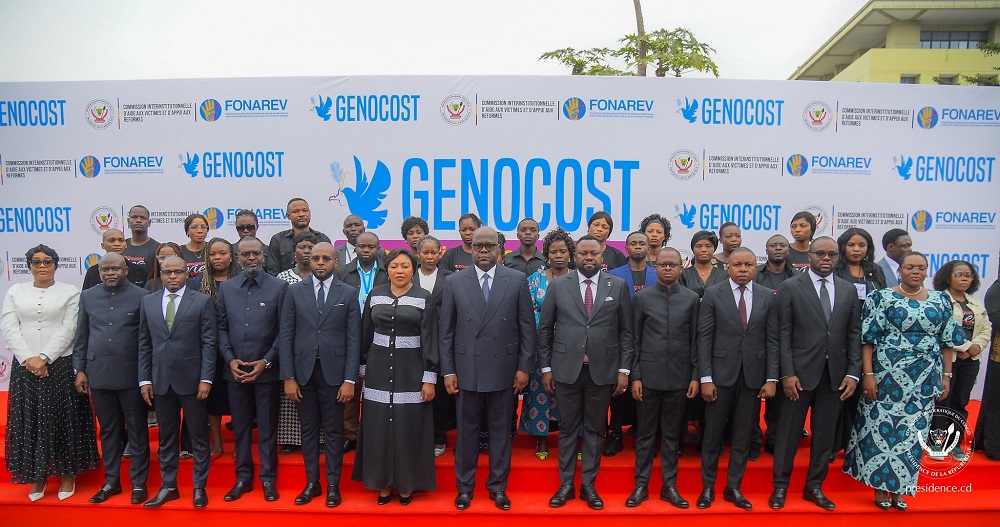
The AFC/M23 coalition said that a commemoration ceremony held in Kinshasa on August 2, 2026, to remember victims of what the Democratic Republic of the Congo government calls “Genocost” could be being used for political interests.
In a statement issued by AFC/M23 spokesperson Lawrence Kanyuka, three days after the ceremony, the coalition said the event could lead to confusion between the commemoration of conflict victims, international law, and the reconciliation process.
Kanyuka said AFC/M23 mourned all those who lost their lives in the decades-long conflicts in the DRC, regardless of their ethnicity, language, religion, or region of origin.
He said Congolese people who were killed, displaced, injured, or lost their livelihoods have the right to know the truth, obtain justice, receive reparations, and be assured that such a tragic history will not be repeated.
AFC/M23 said the way the Kinshasa government uses the term “Genocost” could blur the distinctions between different categories of international crimes, potentially diminishing their seriousness while overlooking the root causes of the problems in the DRC.
It said the DRC government’s emphasis on “Genocost” appears to be a political initiative with an objective other than seeking justice, and that it could further fuel conflict and deepen discrimination based on ethnic origin, language, and a person’s identity.
AFC/M23 Deputy President in charge of Politics, Diplomacy and Governance, Bertrand Bisimwa, said: “People do not need to be remembered publicly; they need genuine remembrance. When someone distorts words, they eventually distort history. And when history is distorted, the dead are killed a second time.”
The coalition said that some groups of people have been overlooked in the history of the DRC, stressing that remembrance should be carried out without excluding anyone affected by the conflicts.
AFC/M23 also said that efforts to establish the truth and build lasting peace in the DRC should be based on independent investigations, with all those responsible for crimes brought to justice without discrimination.
The coalition emphasized that lasting peace in the DRC will not be achieved by pitting historical narratives against each other or by conflating legal definitions. Instead, it can be achieved through truth, accountability for those who committed crimes, and a broader acknowledgment of the country’s history.