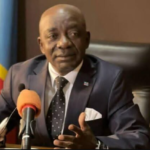




Burundi’s Minister of Foreign Affairs, Edouard Bizimana, has once again been heard condemning the FDLR, while making divisive remarks about Rwanda. When it comes to Kigali, he is known for abandoning diplomatic language and resorting to inflammatory rhetoric.
In an interview Bizimana gave to a journalist from Main Switch 27, which was published on August 17, 2026, the minister said Burundi maintains good relations with other countries except Rwanda.
According to Bizimana, the strained relations stem from Rwanda’s refusal to hand over individuals who attempted to overthrow the government of Pierre Nkurunziza in May 2015.
He said: “There is a slight problem with Rwanda. You know that it is the country hosting those who attempted to overthrow the government in Burundi in 2015. We have continued to engage with them, but sometimes we find that they do not honor what they say. They had agreed to return these people to Burundi so that they could face justice, but they did not do so. Instead, they continued to deceive us and even used them on the opposing side in Congo to attack us and create chaos in the country. But God has helped us through all of this, and we remain vigilant. They will not find a way through.”
Rwanda has repeatedly explained that it cannot hand them over because it received them as refugees and that refugee matters are governed by international law.
Rwanda’s Minister of Foreign Affairs and International Cooperation, Amb. Olivier Nduhungirehe, recently said that Rwanda has never agreed to hand over to Burundi those accused of attempting to overthrow Nkurunziza’s government.
He said: “Discussions over people accused of involvement in the coup attempt in Burundi took place three years ago, in 2023, but they did not end successfully because some of the conditions requested from the Burundian side were never fulfilled.”
Bizimana said the talks are still ongoing, adding: “As for the dialogue, we are talking. There are institutions that are in communication to see whether things can return to normal, because we know—and they also know—that without security in our two countries, with trade relations not functioning well, we will not achieve development.”
Bizimana and Ethnic Division
One of the most closely watched parts of the interview was where Bizimana compared the paths Burundi and Rwanda have taken after the troubled histories both countries experienced.
He said Burundi chose to promote coexistence among Hutus, Tutsis and Twa, but when speaking about Rwanda, he claimed that one section of the population had been excluded.
He said: “They took a different path, continuing to say, ‘You have no place here,’ while ignoring the fact that God gave the country to all its people. We saw things differently: Hutus, Tutsis, Twa and others have nowhere else to go. We have one country, the country God gave us, and we are required to live together in it, share what it has, help one another and build it together.”
He added: “Others took that path as well, and I believe it is not the right path because we have seen where that path led in Burundi’s history. You saw how it ended, and I believe they will eventually realize that the path they have taken offers no solution.”
Bizimana did not specify which section of Rwandans he claimed had been excluded. However, his remarks appear to reinforce an attempt to frame Rwanda through an ethnic lens, despite the country having moved away from such an approach more than three decades ago.
Pacifique Nininahazwe, head of FOCODE and a close observer of Burundian politics, has for some time criticized Bizimana’s rhetoric.
Nininahazwe said: “One of the mistakes the Ndayishimiye administration will regret is appointing Edouard Bizimana as Minister of Foreign Affairs. He is a minister who uses language that is almost like that of a herder.”
Nininahazwe portrays Bizimana as a leader known for harsh and inflammatory rhetoric that could create diplomatic problems for Burundi rather than help strengthen its diplomacy.
He Condemned the FDLR
Bizimana’s history on X shows that the FDLR and Rwanda are among the issues on which he has been particularly outspoken. Before joining the government, he had written that the FDLR was no longer a problem for Rwanda but was instead being used as a pretext.
Asked by the journalist about allegations that Burundi cooperates with the FDLR, Minister Bizimana said he does not believe the FDLR poses a serious threat to Rwanda, speaking about the group in a way that downplays the gravity of its history and activities.
He said: “The FDLR has never attacked Rwanda. For more than 30 years, they have been talking about it, but the group has never launched an attack on Rwanda. Since 1996, there have been attacks, and they have worked with the government of Congo to fight them […] We cannot support the FDLR because we know it serves no purpose.”
According to Bizimana, therefore, the FDLR, which has been present in eastern DRC for more than 30 years, appears to become a significant issue depending on who raises it. In his view, when Rwanda raises the issue, it is merely being used as a “pretext.”
However, dismantling the FDLR is one of the key provisions of the Washington Peace Agreement signed between Rwanda and the DRC, while the international community has continued to call for the terrorist group to be effectively dismantled.
This is not the first time Bizimana has taken this position. In early July 2025, after President Kagame said Rwanda expected the DRC to dismantle the FDLR, Bizimana posted on X: “The FDLR card no longer works.”
Bizimana has also previously said that the FDLR “is no longer a problem for Rwanda” and that Kigali uses it as a pretext—remarks he had made even before he was appointed minister.
In the interview, Bizimana did not limit his remarks to security and politics. He also spoke about the living conditions of Rwandans, claiming that there is severe hunger in Rwanda, which has led some people to cross into Burundi to steal crops.
He provided no figures or other evidence to support his claim.
He said: “I believe they are seeing the problems they are facing. We have heard that Rwandans frequently come to Burundi to steal; some have been sneaking in to steal from farms because of the hunger they are experiencing.”
Unless diplomacy has now been reduced to domestic quarrels, it is difficult to understand why a Foreign Affairs Minister would make such unsubstantiated claims, which do little to benefit his country.
A regional affairs analyst who spoke to IGIHE described Bizimana as one of the worst diplomats Burundi has had, citing the harsh language he frequently uses when speaking about Rwanda.
He said: “Minister Bizimana has no diplomatic decorum. Whenever Rwanda is involved, he uses inflammatory language and appears to support anyone who opposes Rwanda. You have seen how he dismisses the FDLR as a problem and how he attacked Qatar, which has been facilitating talks in Doha between the DRC government and the AFC/M23.”
On January 3, 2026, Minister Bizimana took to social media and accused Qatar of using its financial resources in matters concerning the Democratic Republic of Congo in an effort to prevent Rwanda from facing sanctions.
He said: “It is important to expose Qatar’s negative role, as it uses its influence and financial resources to prevent the United States from taking action.”
These remarks sparked intense debate and put pressure on Burundi, prompting President Evariste Ndayishimiye to apologize on social media. Minister Bizimana stayed off social media for some time afterward.
Between Kigali and Bujumbura, where both sides say the door to dialogue remains open, words can either serve as a bridge or fuel a fire. Bizimana, however, appears to be trying to build a bridge while simultaneously setting fire to the very ground on which both sides are trying to find common ground.