


The peace agreement signed in Washington, D.C., United States, on June 27, 2026, requires the Armed Forces of the Democratic Republic of the Congo (FARDC) to dismantle the FDLR armed group, after which Rwanda would remove the defensive measures it has put in place along the common border.
Although a year has passed since the agreement was signed, FARDC has not dismantled the group. Instead, cooperation between the two has reportedly intensified, with some analysts arguing that they now operate almost as a single force.
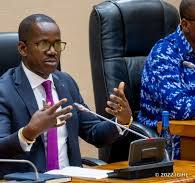
Speaking to RBA, Senator Evode Uwizeyimana said that dismantling the FDLR would be impossible unless the entire Congolese army were dismantled as well, arguing that the two have become so deeply intertwined that separating them is no longer feasible.
“The FDLR is embedded within FARDC. As I said before, dismantling the FDLR would require dismantling FARDC. Asking the Congolese government to dismantle its own national army is, in my view, asking it to do something impossible,” Senator Evode Uwizeyimana said.
Uwizeyimana argued that if the FDLR cannot be dismantled, Rwanda should not remove the defensive measures it has deployed along its border, saying that doing so would amount to an act of extreme recklessness.
“Calling on Rwanda to remove its defensive measures is like saying, ‘These measures are preventing us from killing you; remove them so we can finish you off.’ That is what it means. It is not even a question of being suicidal—wouldn’t that simply be madness?” he said.
The senator added that, as long as the FDLR remains intact, Rwanda’s only viable option is to maintain its defensive posture. He argued that lifting those measures would pose far greater risks to the country’s security than any sanctions it might face.
“Sanctions would be a far smaller consequence than what could happen if we removed our defensive measures. To me, that is perfectly clear,” he said.
Rwanda Defence Force (RDF) spokesperson Brig. Gen. Patrick Karuretwa explained that Rwanda’s defensive measures were adopted in response to lessons learned from past insurgent attacks launched from the Democratic Republic of the Congo (DRC). He added that these measures are continually adjusted to reflect the evolving security situation.