


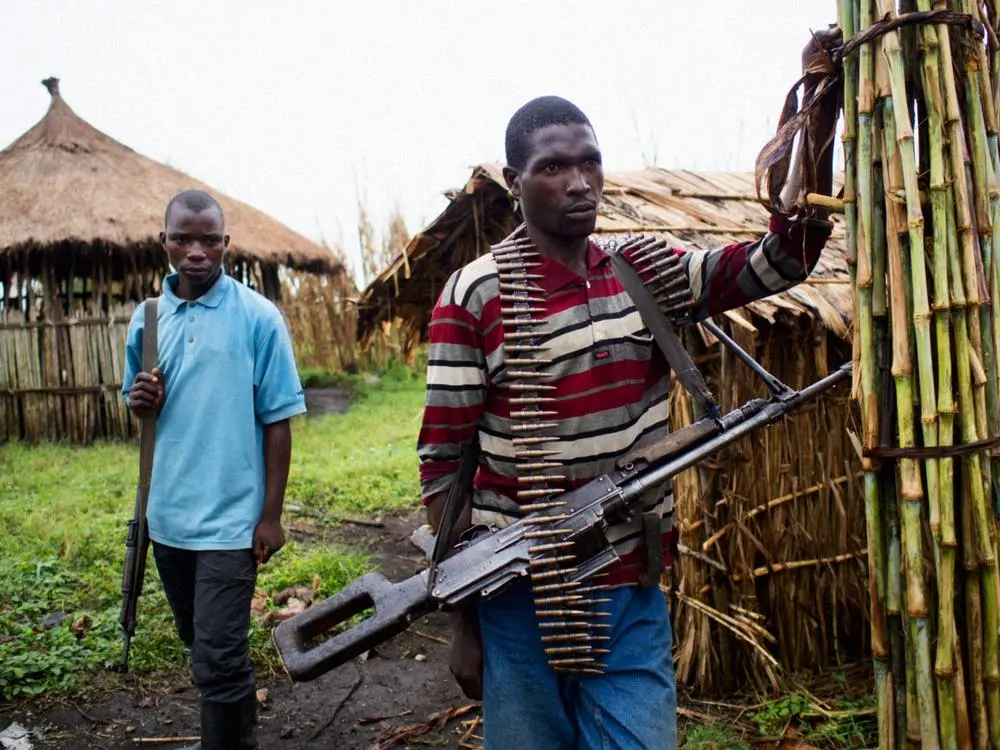
A report by the United Nations Group of Experts on the Democratic Republic of the Congo identifies the FDLR as an armed group that continues to play a significant role in fueling insecurity in eastern DR Congo and Rwanda.
The report outlines the FDLR in numbers: three factions, at least four senior leaders, more than 10,000 fighters according to the FDLR’s own claims, and over 20,000 claimed by its CRAP branch. However, the United Nations and intelligence agencies estimate the group’s actual strength at between 3,500 and 4,500 fig
The report states that the FDLR is divided into three main factions: FDLR-FOCA, FDLR-RUD, and FDLR-FPP.
According to the report, these factions have also adopted different names to conceal their links to the FDLR. FDLR-FOCA operates under the name “Bataillon Jungle,” FDLR-RUD uses “FDP-R,” while FDLR-FPP retains the name “FPP.” This reflects the group’s efforts to disguise its identity while continuing to pursue coordinated activities.
The report further states that the leaders of the three factions are Rwandan nationals, while the rank-and-file fighters are predominantly Congolese Hutus.
The report identifies Pacifique Ntawuguka, also known as Gen. Omega Israel, as the military commander of FDLR-FOCA. Lt. Gen. Gaston Iyamuremye, alias Victor Byiringiro, serves as the FDLR’s political leader. Brig. Gen. Emmanuel Nsengiyumva, known as Faida Hakimu, heads FDLR-RUD, while Col. Dan Hategekimana, alias Dan Simplice, leads FDLR-FPP.
Although these factions appear to operate independently, the report says Gen. Omega is regarded as the overall leader, playing a central role in key decisions and negotiations involving all three branches. This indicates that while the FDLR is divided into separate factions, it continues to coordinate its operations under a unified leadership structure.
The report highlights a significant discrepancy in estimates of the FDLR’s strength. The group claims to have more than 10,000 fighters, saying that nearly half of them are active combatants engaged in ongoing military operations. Its FDLR-CRAP branch goes even further, claiming to command more than 20,000 fighters.
However, the report says these figures are not considered credible. The United Nations and intelligence agencies estimate that the FDLR has between 3,500 and 4,500 fighters in total. Meanwhile, the Washington Agreement estimated the group’s strength at between 3,000 and 3,500 fighters. These differences suggest that the FDLR may be inflating its numbers to project greater military strength than it actually possesses.
The report also maps the areas where the FDLR’s factions operate. FDLR-RUD is primarily active in Bwisha and Bwito territories in Rutshuru. It also operates in Jomba, Binza, Busanza, and Bukoma. FDLR-FPP is likewise based in Rutshuru. FDLR-FOCA, the group’s largest faction, has a broader presence across North Kivu, particularly in Nyiragongo, Masisi, Rutshuru, and Walikale.
The report further states that FDLR-FOCA’s CRAP branch claims to have units operating on the outskirts of Goma, with others having infiltrated the city itself.
These findings carry significant security implications, given Goma’s proximity to the Rwandan border. According to the report, the presence of FDLR elements inside the city suggests that the group retains the ability to operate covertly in strategic urban areas while continuing to pose a security threat.
Regarding military operations, the report states that the FDLR has remained active on the battlefield in North Kivu. In some areas, its fighters operate independently, while in others they fight alongside the Armed Forces of the Democratic Republic of the Congo (FARDC) or local militia groups known as VDP/Wazalendo.
On March 29, 2026, FARDC announced the launch of operations against the FDLR. Beginning on March 30, it deployed troops, including elite “Hiboux” or “jungle battalions,” from Kisangani to Walikale, saying they had been sent to combat the group.
However, the report questions the credibility of that campaign. It states that despite FARDC’s public announcements, some officials in Kinshasa and FARDC commanders in eastern DR Congo reportedly assured FDLR leaders that no offensive against the group would actually take place.
On April 7, 2026, a confidential meeting was reportedly held in Pinga, Walikale, bringing together senior representatives from Kinshasa, including FARDC generals, and leaders of FDLR-FOCA. According to the report, the participants agreed that cooperation between the FDLR and FARDC should continue.
The report also states that in late March 2026, a FARDC helicopter delivered weapons to Pinga intended for FDLR-FOCA. These weapons were reportedly meant for fighters under the command of Maj. Gen. Uzabakiriho Cyprien, also known as Kolomboka Niyo Tedium Mugisha, who was involved in fighting in Masisi. The equipment was received by the FDLR-CRAP unit, which later returned to Masisi.
According to the report, this was not an isolated incident. It says similar activities also took place in late 2025, when FDLR fighters led by an individual known as Togolais, operating in Bwito, went to Pinga to collect weapons and ammunition.
Based on the Washington Peace Agreements, the FDLR was supposed to be dismantled. A meeting held in Washington on March 17–18, 2026 identified six locations where operations to dismantle the group were to be carried out—five in North Kivu and one in South Kivu.
These areas were designated as NAIs (Named Areas of Interest). The first and second NAIs were located in North Kivu, particularly in the Pinga–Mpeti–Lukweti axis, while the third NAI was situated in the highlands of North Kivu, excluding Minembwe.
The report also highlights key timelines. On March 31, 2026, FARDC forces were expected to begin operations against the FDLR in NAI-1, in the Pinga–Lukweti areas.