



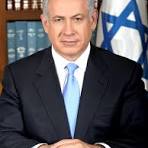
On August 19, Israeli Prime Minister Benjamin Netanyahu said Israel would not tolerate Turkey building up its military capabilities in Syria, warning that the expansion of such capabilities toward southern Syria would put Israel’s security at risk.
His remarks came a day after the Israel Defense Forces (IDF) carried out a strike on a military facility near Idlib, about 298 kilometers from the Israel-Syria border.
Netanyahu warned Turkey against such military activities in Syria, saying the country should not “walk into the fire.”
He added: “The message had already been delivered, but it appears they did not understand it, so we did what was necessary to make them understand it more clearly.”
Turkey strongly rejected what it described as “unfounded allegations” by Israel regarding its military activities in Syria, following Israel’s strike on a Syrian airbase near the Turkish border.
On Tuesday, Israel carried out airstrikes on the Abu al-Duhur military airbase near Aleppo. Turkey strongly condemned the strikes, while the United States also criticized the attack, saying it risked unnecessarily escalating tensions.
In a statement issued by Netanyahu’s office on Tuesday night, Israel said Syria was close to violating security understandings it had reached with Israel by allowing Turkish forces to be deployed at the airbase.
It said that the deployment of those forces would threaten Israel’s security and that Israel would not tolerate it.
In response, Turkey said Israel’s accusations against Ankara were part of Netanyahu’s efforts to continue what it described as provocations. It added that lasting peace in the region could only be achieved if Israel respected international law and ended its policy of provocation and pressure.
Tuesday’s strikes further strained security relations between Israel and Turkey, with both sides continuing to exchange sharp statements over Syria, where the two countries’ forces are active.
Israel has troops deployed in southern Syria as part of efforts to monitor and prevent hostile armed groups from gaining a foothold there.
It is also seeking to prevent regional rivals such as Iran and Turkey from establishing military bases or deploying key military equipment near its border.
Meanwhile, Turkey has expanded its military operations and influence in Syria, reaching into several parts of the country as it seeks to play a role in shaping Syria’s new security institutions.
Turkey is the second-largest military power in NATO and has become one of the key allies of Syrian President Ahmed al-Sharaa.
Ankara accuses Tel Aviv of attempting to destabilize Syria and undermine its new government. Turkey has continued to call on the international community to put pressure on Israel and take measures to ensure that it respects Syria’s sovereignty.
Turkey is training Syrian forces and helping the country rebuild its state institutions and infrastructure.
Last year, Turkey and Israel, which have long disagreed over the war in Gaza, established a communication mechanism aimed at preventing incidents that could lead to clashes in Syria.
Tom Barrack, the U.S. Special Envoy for Syria and Iraq, told Reuters following Tuesday’s strikes that Washington was seeking to establish mechanisms to prevent Israel, Turkey and Syria from coming into conflict.