


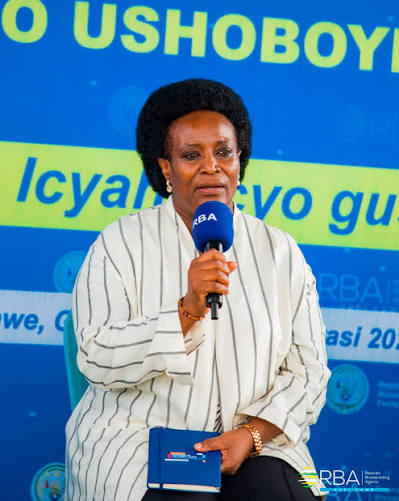
Minister of Gender and Family Promotion, Consolée Uwimana, compared the return of Rwandans who were formerly members of the FDLR and other armed groups operating in the Democratic Republic of the Congo to receiving salvation.
Minister of Gender and Family Promotion Consolée Uwimana made the remarks on July 3, 2026, while officially inaugurating an Early Childhood Development (ECD) center at the Mutobo Reintegration Centre. The facility is primarily intended to serve the children of former members of armed groups operating in the Democratic Republic of the Congo.
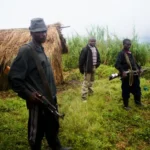
Located in Busogo Sector of Musanze District, the Mutobo Reintegration Centre receives, rehabilitates, and reintegrates into society Rwandans who have left armed groups, including the FDLR, which operates in eastern DRC.
After inaugurating the ECD center, Minister Uwimana met with former members of these armed groups and encouraged them to play an active role in rebuilding and developing Rwanda.
Minister Consolée Uwimana compared accepting salvation to the decision made by Rwandans who are members of armed groups operating in eastern DRC, including the FDLR, to return home. She said that as time passes, more members of these groups are changing their views and choosing to return to Rwanda instead of continuing to oppose the country.
She said: “Receiving salvation is not about when you received it; once you choose to accept it, you become part of God’s people. I relate this to our own history because many people fled Rwanda and returned shortly after the Genocide against the Tutsi ended. Others returned over the years, but today it is your turn to come back.”
“It does not matter when you arrived; what matters is that you have reached your country, and today you have been welcomed in Rwanda and are being treated well. You have done the right thing by choosing to return home.”
She told them that the country had never forgotten them and that they would be given opportunities to contribute to Rwanda’s continued development.
She reminded them that, although they had lived through difficult circumstances marked by insecurity, extreme poverty, and the abuse of women and girls through sexual violence, their return to Rwanda marked a new chapter in their lives. She encouraged them to make the most of this new opportunity.
Minister Consolée Uwimana said that Rwanda’s development over the past 32 years was not achieved by chance, but was the result of the country’s deliberate choice to build values and principles that define both the nation and Rwandans as a people.
She said that unity among Rwandans, a forward-looking mindset focused on finding solutions for development, and accountability were among the factors that have enabled citizens to progress and contributed to the country’s overall advancement.
She said: “The development you see in Rwanda today is not an accident; it is something we worked for, and we did so through a clear approach. Development did not come by itself. It came because we chose to be united, we chose to build rather than destroy, and we chose to love our country instead of betraying it. We also need you as Rwandans who love their country and are committed to building it.”
She reminded them that development begins at the family level and that Rwanda seeks to have families that are secure economically, socially, and through good governance.
Minister Uwimana told them that they should leave the Mutobo Centre having acquired vocational skills that would enable them to work and improve their families’ livelihoods, rather than resorting to theft or other harmful activities.
Regarding social welfare, she reminded them of the importance of paying community-based health insurance contributions so that every family member can have access to good health care.
She said: “You should build a stable family without conflicts. We want you to sit together, discuss what you plan to do, and work together in raising your children.”
The Rwanda Demobilization and Reintegration Commission (RDRC) says that since 2001, it has rehabilitated and reintegrated 12,602 former members of rebel groups operating in eastern Democratic Republic of the Congo.