


Russia said in September it is willing to continue adhering to the central limitations of the treaty for at least another year, if Washington does likewise. Speaking on Thursday, Kremlin spokesman Dmitry Peskov said that Russia regretted the end of New START.
New START, which was signed in 2010 under President Barack Obama and came into effect the following year, was an agreement between the U.S. and Russia to reduce the countries’ nuclear stockpiles, which ballooned in the early decades of the Cold War and still dwarf those of any other country. It followed other agreements between the countries aimed at limiting the arsenals. The treaty was agreed to for 10 years and permitted one five-year extension — which was agreed to under the Biden administration — and ran through Wednesday.
The deal limited both countries to 700 deployed intercontinental ballistic missiles, submarine-launched ballistic missiles and heavy bombers equipped to transport nuclear weapons; 1,550 nuclear warheads on these vehicles; and 800 “deployed and non-deployed” launchers. It also placed limits on Russian intercontinental nuclear weapons that can reach the U.S.
The treaty provided for 18 on-site inspections per year for each side — although these have not happened for several years.
The accord was separate from the nuclear Non-Proliferation Treaty, which 191 states — including the U.S., Russia and all NATO members — have joined since it went into effect in 1970.
The NPT seeks to prevent the spread of nuclear arms, to promote peaceful use of nuclear energy and further the goal of nuclear disarmament. It does not, however, outline any timetable or specific limits on the five nuclear powers that are party to the agreement; there are also several other nations that are believed to have nuclear weapons but are not part of the agreement.
What have the U.S. and Russia said?
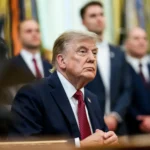
New START is “not an agreement you want expiring,” President Donald Trump said in July, adding: “When you take off nuclear restrictions, that’s a big problem for the world.”
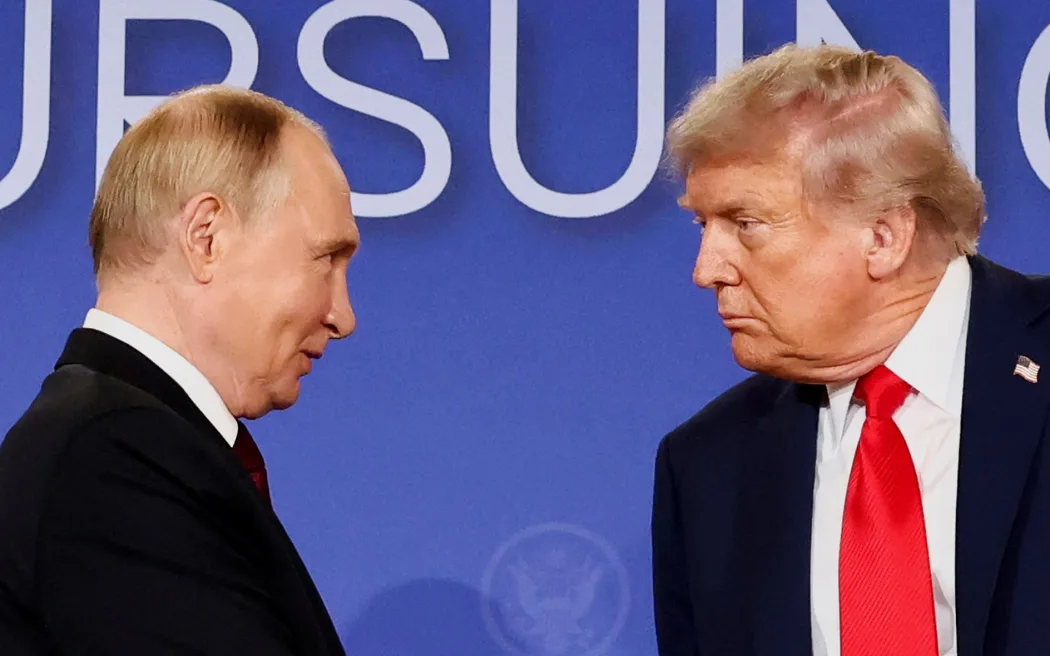
Russian President Vladimir Putin said in September that Moscow is willing to continue to adhere to the treaty’s limits for a further year after its expiration, “to prevent the emergence of a new strategic arms race and to preserve an acceptable degree of predictability and restraint.”
But he added that such a move would only be possible “if the United States acts in a similar spirit and refrains from steps that would undermine or disrupt the existing balance of deterrence.”
As New START expired Thursday, Trump criticized it as a “badly negotiated deal by the United States that, aside from everything else, is being grossly violated.”
Was the treaty working?
New START has largely been successful in its goal of limiting both countries’ nuclear arsenals and ensuring verification, according to Cole.
Monitoring compliance has become more difficult in recent years, however. Inspections were interrupted during the coronavirus pandemic; then, amid growing tensions over Russia’s invasion of Ukraine, Moscow announced in early 2023 that it was suspending its role in the treaty.
That document, issued under the Biden administration, noted that the U.S. was unable to determine whether Russia had complied with the treaty’s limit on deployed warheads over the previous year — and at times may even have exceeded restrictions “by a small number” — but determined that this did not amount to a threat to U.S. national security.
While Russia’s suspension “significantly undermined the treaty’s verification regime and weakened its effectiveness,” both countries have continued to observe its limits, according to Cole. “This suggests that even weakened, New START reinforces strategic stability,” she added.
What has changed since the treaty was signed?
“The global security environment has deteriorated dramatically since 2010,” according to Cole. “Russia’s invasion of Ukraine, rising geopolitical rivalry and militarisation, the collapse of many arms control mechanisms, and the erosion of trust between major powers have all contributed to greater instability.”