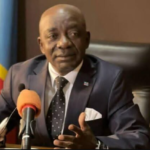




Foreign Affairs Minister Amb. Olivier Nduhungirehe said African countries should invest in developing citizens’ technological skills and use advanced technology to protect national security and sovereignty.
Those following the Russia-Ukraine war have seen how technology has transformed modern warfare. Ukraine can launch attacks thousands of kilometres inside Russia using drones, while Russia can strike various cities without having soldiers on the ground.
These drones include the An-196 Liutyi, which can fly between 1,000 and 2,000 kilometres before detonating. It is programmed with a route to its target and then operates independently until it reaches its destination.
Other military technologies include robots equipped with sensors that can identify targets, analyze information, make decisions and carry out tasks with little or no human involvement.
More recently, the war involving the United States, Israel and Iran has demonstrated how advanced technology and artificial intelligence are increasingly being used in warfare, including intelligence operations, drone strikes and attacks carried out simultaneously or within a short period.
Speaking at the International Security Conference on Africa (ISCA) in Kigali on August 12, 2026, Minister Nduhungirehe said such technologies have already reached the hands of state security agencies and armed groups in different regions, making it essential for national forces to develop stronger capabilities to use and counter them.
He said, “Advanced autonomous systems and artificial intelligence are becoming increasingly accessible even to non-state actors. This means our armed forces and security agencies must embrace these technologies and stay ahead. Africa cannot afford to be left behind as these technologies continue to evolve. We must understand what they mean for our security, but also for our sovereignty.”
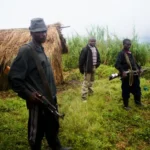
Africa has long faced conflicts in regions including West Africa, where terrorist groups operate, the Great Lakes region, and elsewhere.
He added, “Advanced autonomous technology is an opportunity. It can help us better address some of the threats to our security, including terrorism, attacks by armed groups and organized crime. To fully benefit from these technologies, Africa must invest in its own capabilities by developing the necessary skills, strengthening our institutions and building the capacity to create solutions to our challenges in our own way.”
Minister Nduhungirehe said ISCA provided a platform for continued discussions and for developing African solutions to the security challenges facing the continent.
Rwanda Defence Force Director General for Research and Development, Col. Patrick Nyirishema, noted that in the past, military strength was measured by the number of soldiers, weapons and strong industries a country possessed, but that this has now changed.