


The government of the Democratic Republic of Congo (DRC) says it has made significant progress toward reaching an agreement with the FDLR, an armed group designated as a terrorist organization, to lay down its weapons and reintegrate its fighters into civilian life. The government says the move is part of its efforts to implement the Washington peace agreement.
The agreement, announced in late July 2026, was strongly rejected by the Rwandan government, which pointed out that the Washington peace agreement does not provide for such an arrangement. Instead, Rwanda described it as a tactic by Kinshasa to delay the implementation of the peace deal.
The Rwandan government argued that the Washington peace agreement is sufficient and that its implementation should not involve negotiating with or appeasing the FDLR. Instead, it said, concrete action is needed to dismantle the group.
The agreement between the DRC government and the FDLR contains several unclear provisions, raising concerns that it may be a maneuver by both sides aimed at convincing the international community that the issue of the FDLR is being resolved, while the group’s activities continue on the ground.
Questions Over the Timeline
The agreement between the DRC government and the FDLR does not set out a clear timeline, making it difficult to hold either side accountable for the progress they are making in implementing the agreement or to explain delays if a deadline is missed.
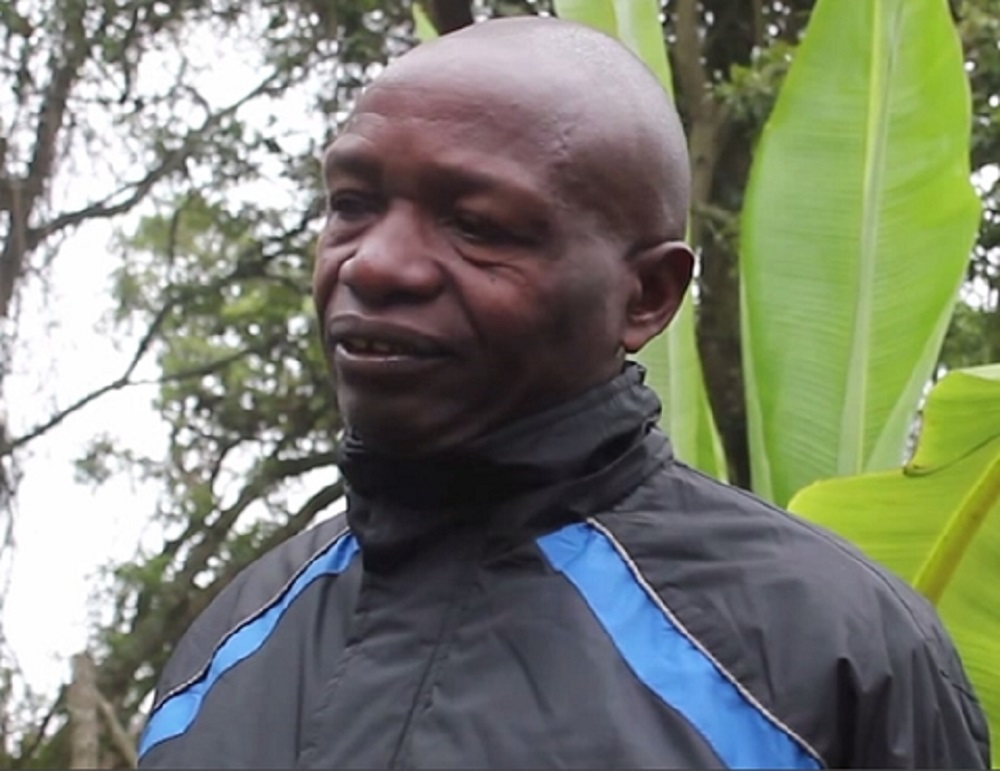
Cure Ngoma, the FDLR’s political spokesperson, recently explained that no timeline had been established because the group’s leadership had made several requests and was still waiting for a response.
Ngoma said, “That process has not yet been reached. You can see that what we signed is a protocol, meaning that this is another step that will be followed by the next one. As for the requests we have made, we believe they are not unreasonable and will gradually be implemented.”
Among the FDLR’s demands under the agreement is to be placed in secure facilities where its members cannot be attacked, while those who do not wish to return to Rwanda should be relocated to other countries.
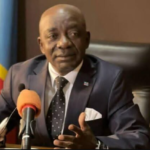
Floribert Anzuluni, the DRC’s Minister in charge of Regional Integration, told Radio France Internationale (RFI) that a timeline and budget proposal already exist, and that the current process is focused on approving them.
He said, “We now have a work plan. We have a timeline and a draft budget. That is why we cannot provide detailed information at this stage.”
Under the Washington peace agreement, the DRC government was required to dismantle the FDLR within 90 days. The United States has indicated that Kinshasa has failed to comply with the agreement, at least in areas under its control.
Given the DRC government’s history of delaying the implementation of agreements, its failure to provide a timeline for dismantling the FDLR under the agreement could be seen as a way of avoiding accountability.
The Number of FDLR Fighters Remains Undisclosed
Various reports, including one by United Nations experts, provide different estimates of the number of FDLR fighters. However, last year, the group’s military spokesperson, Lt. Col. Octavien Mutimura, said the FDLR had more fighters than people might think.
The experts published a report in late June 2026 stating that the FDLR claimed to have more than 10,000 fighters, while its armed wing claimed to have more than 20,000. However, the experts estimated that the credible figure was between 3,500 and 4,500 fighters.
Following its agreement with the DRC government, the FDLR does not want its actual number of fighters to be made public, even though such figures would be important in determining how many fighters eventually lay down their weapons and how many remain armed.
Cure Ngoma told the Agasaro Kaburaga channel, “Regarding the number, you know as a journalist that the figure is not something to be published on websites or announced on radio. It is a matter of confidentiality for the leadership.”
Minister Anzuluni said that if the DRC government were to say the FDLR “has 500 fighters, Rwandans say 10,000, while others say 5,000,” the important thing is that their program will ensure that all the fighters are identified and that plans are being made for where they will be accommodated.
The FDLR spokesperson said that during the implementation of the agreement, “those who are authorized” will know the number of fighters belonging to the armed group, but he did not specify who those authorized individuals are.
Asked what the FDLR plans to do if some of its fighters refuse to comply with the agreement to lay down their weapons, Ngoma said there were no concerns that they would reject it because they respect their leadership.
He said, “I want to tell you that we have a well-organized leadership. We respect our leaders. Once a decision is made, it is final. We have no concerns that some people will fail to follow the program.”